Welcome: Guangzhou DIGE Textile Co., Ltd
Language:
 ∷

∷
 ∷
When traveling across Europe, many visitors enjoy staying in independent hotels with distinctive local character.
Some are located in beautifully restored historic buildings. Others are boutique properties overlooking the Mediterranean, surrounded by countryside or situated within charming historic neighborhoods.
Compared with large international hotel chains, these properties often offer more distinctive architectural styles, regional culture and personalized hospitality.
However, maintaining a unique identity does not mean that independent hotel operators face fewer business challenges.
How can they attract more international travelers?
How can they gain access to global reservation channels?
How can they establish a more stable customer base?
And how can they strengthen their market competitiveness without losing the character that makes their properties special?
These questions are encouraging more independent hotels to reconsider how they work with international hotel groups.
On November 2, 2026, Wyndham Hotels & Resorts announced a strategic partnership with HotelREZ Hotels & Resorts.
Under the agreement, more than 40 independent luxury hotels are expected to join Wyndham's Registry Collection Hotels brand portfolio by early 2027.
Participating hotels will gain access to global distribution channels, loyalty programs and related commercial technology support while retaining their existing brand identities, ownership and operational independence.
The partnership includes distinctive properties in destinations such as Greece, Malta, Northern Ireland, Thailand and Colombia.
This development highlights an increasingly relevant direction in the international hospitality industry:
Independent hotels do not necessarily need to abandon their individuality to benefit from the resources and international reach of major hotel groups.
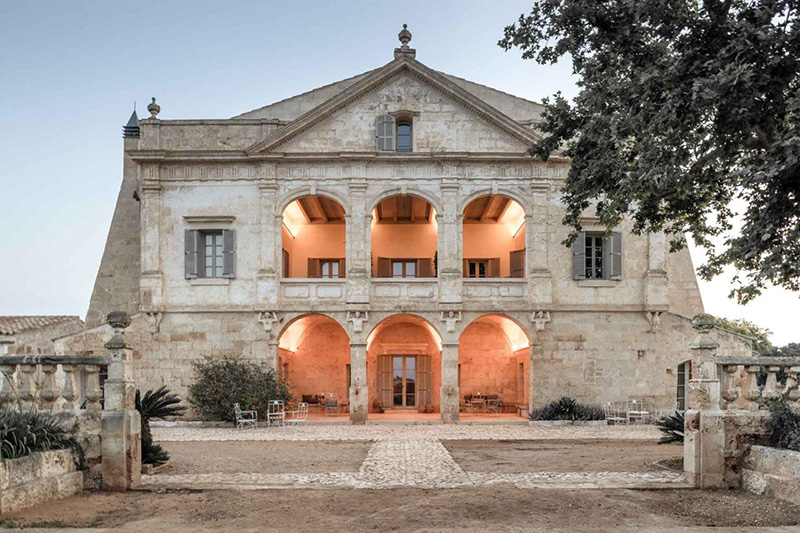
Europe has long been one of the world's most established markets for independent and boutique hotels.
Compared with some markets in the United States and Asia-Pacific, Europe has traditionally maintained a large number of family-owned hotels, locally operated properties and independently managed accommodation businesses.
Many of these hotels have distinctive regional characteristics.
For example, hotels on the Greek islands often emphasize sea views and Mediterranean architecture.
Italian heritage hotels may preserve historic buildings and traditional design elements.
Countryside hotels in the United Kingdom frequently highlight estates, gardens and local lifestyles.
These characteristics give independent properties a unique appeal in the international travel market.
However, increasing competition is creating new challenges for independent hotel operators.
Large hotel groups benefit from established loyalty programs, international distribution networks, brand recognition and digital management systems.
For smaller independent properties, developing these resources independently can require considerable investment.
As a result, a more flexible cooperation model is attracting attention.
Hotels can retain their original names, architectural styles and distinctive hospitality concepts while joining larger hotel groups' brand collections or commercial networks.
According to CoStar data, chain-branded hotels accounted for more than 41% of Europe's total hotel room supply in August 2026, compared with 36% in 2020.
This figure measures the share of hotel rooms operated under chain brands, rather than the percentage of individual hotel properties.
Because chain hotels often have larger average room capacities, the distinction is important.
Nevertheless, the data indicates that branded hotel groups are expanding their presence in the European accommodation market.
The industry is also exploring more diverse approaches to hotel ownership, branding and commercial cooperation.
The partnership between Wyndham Hotels & Resorts and HotelREZ Hotels & Resorts is a notable example of this development.
Under the agreement, more than 40 independent luxury hotels from HotelREZ's Elegant Hotels of the World collection are expected to join Wyndham's Registry Collection Hotels.
These properties are not necessarily required to adopt the traditional operating model of a fully standardized hotel chain.
According to the companies' announcements, participating hotels can retain their Elegant Hotels of the World affiliation while gaining access to Wyndham's commercial distribution network and Wyndham Rewards loyalty program.
Wyndham has reported approximately 129 million enrolled members in its loyalty program.
For independent hotels, this provides an opportunity to reach a broader international customer base.
At the same time, participating properties can retain their individual brand positioning, ownership and operational independence.
The initial portfolio includes properties such as:
Rosselli AX Privilege — Valletta, Malta.
The TownHouse Mykonos — Mykonos, Greece.
Galgorm Resort — Northern Ireland.
TreeHouse Villas Koh Yao — Koh Yao, Thailand.
Cinco Quintas Hotel Boutique — Cartagena, Colombia.
These hotels feature different architectural styles and destination characteristics.
Some are built around historic architecture, while others emphasize natural surroundings or distinctive interior design.
Together, they illustrate a new approach to independent hotel development:
Using the commercial resources of a major hotel group while preserving the individual character of each property.
For boutique and independent hotels, individuality is often one of their most important competitive advantages.
A boutique property in a historic district may attract visitors through its architecture and cultural atmosphere.
A seaside resort may differentiate itself through distinctive accommodation design and its natural surroundings.
If every property adopted exactly the same interior design, furniture and guestroom configuration, much of this individuality could be lost.
For this reason, international hotel groups have increasingly explored more flexible brand partnership models.
One approach is commonly known as a soft brand or brand collection.
Unlike traditional hotel franchising models, participating properties do not necessarily need to completely change their original brand identities.
They may retain their existing names, design concepts and certain operational characteristics while gaining access to group reservation systems, loyalty programs, marketing resources and technology platforms.
For hotel owners, this creates another strategic option.
They do not have to build an international sales network entirely on their own, nor must they necessarily abandon their original positioning.
Of course, participating properties still need to meet the relevant brand requirements and contractual obligations.
This demonstrates that future competition in the international hotel market may not simply be a contest between large hotel groups and independent properties.
Cooperation between different business models may also become an important part of industry development.
Independent hotels may emphasize individuality, but that does not mean guestroom products can be managed without clear standards.
In fact, when a hotel gains access to wider international distribution and loyalty networks, it may welcome guests from many different countries and regions.
Travelers may have different expectations regarding architecture, culture and interior design.
However, they generally continue to expect basic standards of cleanliness, comfort and reliability.
For example:
Are the guestrooms clean and well maintained?
Are the beds comfortable?
Are the bed sheets, duvet covers and pillowcases clean and neatly presented?
Are towels and bath towels maintained in good condition?
Do different room categories have appropriate and consistent product configurations?
These fundamental details contribute to a reliable accommodation experience.
For independent hotels, establishing suitable product standards while retaining their distinctive design identity is an important management consideration.
As hotels attract more international guests through global brand networks, consistency in guestroom quality may become even more important.
Hotel brands can tell different stories, but guests continue to expect clean, comfortable and reliable accommodation.
Within a hotel guestroom, textiles play an important role in both visual presentation and everyday comfort.
Different hotel concepts may require completely different design approaches.
For example:
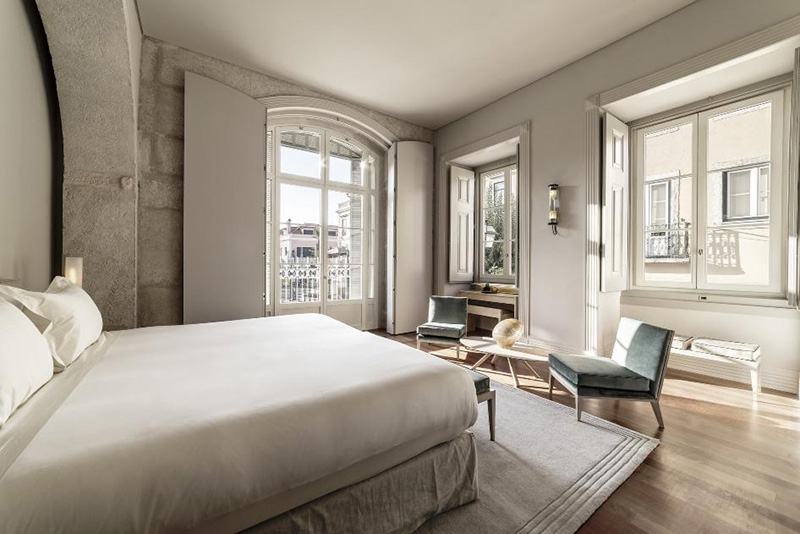
Mediterranean-style hotels may favor natural colors and relaxed interior environments.
Contemporary boutique hotels may prefer minimalist white bedding and coordinated decorative elements.
Historic hotels may focus on balancing traditional architecture with modern soft furnishings.
Tropical resorts may use natural materials and decorative textiles to create a relaxed atmosphere.
These design differences also influence the selection of hospitality textiles.
However, beyond individual design preferences, essential bedding products must continue to meet practical requirements.
Essential bedding
Bed sheets, duvet covers and pillowcases should be available in appropriate dimensions for different bed configurations while maintaining suitable product quality and consistency.
Pillows and duvets
Selection should consider the hotel's positioning, local climate and actual guestroom conditions.
Decorative textiles
Bed runners, cushions and other soft furnishings can be coordinated with the property's interior design.
Towels and bathroom textiles
Product selection should take account of guestroom category, usage scenarios and daily management requirements.
For hotel operators, a practical approach is to establish consistent standards for essential products while allowing suitable adjustments for different room categories and design themes.
This can help hotels maintain their individual identity while making guestroom procurement and management more efficient.
The changing relationship between hotel groups and independent properties may also influence demand across the hospitality supply industry.
In the past, some hotel procurement activities were primarily organized around individual properties or specific projects.
However, as hotel groups, brand collections and regional management networks expand, certain procurement requirements may increasingly involve multiple properties, room categories and product specifications.
This creates new expectations for suppliers.
First, consistent product quality is essential.
When the same hotel brand operates across multiple locations, maintaining consistent product specifications and quality becomes particularly important.
Second, flexible product configurations are valuable.
Different hotels have different architectural structures, bed sizes and guestroom positioning.
Suppliers therefore need to offer suitable product options according to individual project requirements.
Third, long-term cooperation capabilities matter.
Hotel supplies are not necessarily one-time purchases.
As guestrooms remain in operation and products undergo regular replacement, hotels may require ongoing replenishment and additional procurement.
Suppliers that understand project requirements, maintain reliable delivery capabilities and provide appropriate product combinations may be better positioned to develop long-term business relationships.

The cooperation between European independent hotels and international hotel groups reflects the industry's exploration of new development models.
Large hotel groups can expand their brand networks through partnerships.
Independent hotels can gain access to broader international markets.
Travelers may also benefit from a wider selection of accommodation experiences.
However, the expansion of branded networks does not mean that independent hotels will disappear.
For many travelers, properties with distinctive local culture, unique architecture and personalized service continue to offer something that standardized accommodation cannot fully replace.
The future hospitality market may therefore become more diverse.
Some hotels will continue operating through traditional chain models.
Others may join global networks through soft-brand partnerships.
Meanwhile, some boutique properties may choose to remain completely independent.
There is no single model that is necessarily best for every property.
What matters is whether a hotel can establish a suitable market position and consistently deliver products and services that meet guest expectations.
For the hospitality supply industry, this diversity may create more specialized product requirements.
Regardless of a hotel's branding model, the quality, suitability and consistency of essential guestroom products remain important.
Hotels can preserve their individual identities, but they cannot overlook the products that guests actually use every day.
As a hospitality textile supplier, Guangzhou Dige Textile Co., Ltd. continues to follow developments among international hotel groups and changes across the independent hotel, boutique hotel and resort markets.
Our product categories include hotel bed sheets, duvet covers, pillowcases, pillows, duvets, towels and other guestroom textile products.
We believe that although different hotels may have different brand identities, their essential guestroom products should always be selected according to practical requirements.
For standardized hotel chains, consistent product specifications and quality are particularly important.
For boutique and independent hotels, bedding and other textiles should also complement the overall guestroom design.
For resorts, product selection should consider different room categories, local environmental conditions and guest usage requirements.
As international hotel partnership models continue to develop, hospitality procurement requirements may become increasingly diverse.
Guangzhou Dige Textile will continue to focus on product quality, specification compatibility and practical applications, providing suitable textile options for different types of hotel projects.
We believe that regardless of a hotel's brand story or design concept, comfortable, clean and reliable guestroom products remain an essential foundation of a positive accommodation experience.
An excellent hotel should not only be remembered for its distinctive brand and environment, but also for the quality of the products guests experience during every stay.
Contact: Tracy Kuang
Phone: +86-18565305509
Tel: 020-26261315
Email: 1702435072@qq.com
Add: No.38 Xihua Street, Maoshan, Jianggao Town, Baiyun District, Guangzhou, China