Welcome: Guangzhou DIGE Textile Co., Ltd
Language:
 ∷

∷
 ∷
For many years, discussions about the hotel industry have generally focused on new hotel openings, room occupancy rates, average daily rates and changes in tourism demand.
However, beyond hotel operations, another area is receiving increasing attention: hotel asset management.
A hotel building, its guestrooms, facilities and operating systems represent more than an accommodation business. Together, they form a commercial asset that requires long-term maintenance, continuous operations and effective management.
As the hotel industry places greater emphasis on operational efficiency and the value of existing properties, the way hotel businesses manage their assets is also evolving.
On October 30, 2026, China's first hotel-focused public real estate investment trust (REIT), Hu'an Jinjiang Closed-end Commercial Real Estate Investment Fund, commonly known as Hu'an Jinjiang Commercial REIT (Fund Code: 508609), officially began trading on the Shanghai Stock Exchange.
This development expands the range of underlying assets represented in China's public REIT market and provides a new example of capital management and financing in the hotel industry.
According to public information, the fund's underlying assets include 21 midscale and upscale Jinjiang Metropolo hotels across 18 Chinese cities.
The portfolio covers approximately 157,300 square meters of gross floor area and contains 3,086 guest rooms.
Of these properties, 15 are located in second-tier or higher-tier cities, accounting for approximately 72% of the portfolio's total room capacity.
This means that hotel assets are beginning to enter China's public capital markets through a new financial structure, bringing greater attention to the long-term operating performance of hotel properties.
Meanwhile, Colliers released its 2026 China Hotel Asset and Investment Market Review on November 5.
According to the report, 17 major hotel transactions took place in China's first-tier cities during the first three quarters of 2026, with a combined transaction value of RMB 7.905 billion. The number of transactions increased by 88.9% year over year.
From hotel asset transactions to the launch of public REITs, an important development is emerging in China's hotel industry:
Hotel competition is no longer focused exclusively on room capacity and brand expansion. Long-term asset value, operational efficiency and sustainable business performance are also becoming increasingly important.
For many consumers, REITs may be an unfamiliar concept.
In simple terms, a Real Estate Investment Trust (REIT) is an investment structure that allows investors to participate in income-generating real estate assets through a publicly traded fund.
Hotel REITs focus on eligible hotel properties and their operating income, providing a financial structure through which investors can gain exposure to hotel real estate.
Compared with traditional hotel development models, this approach creates another channel for hotel assets to access capital markets.
In the past, hotel companies seeking to expand their portfolios generally relied on internal funds, bank financing or other forms of capital investment.
However, once established hotel properties develop a stable operating foundation, they may also become suitable candidates for asset securitization and other forms of capital management.
The launch of Hu'an Jinjiang Commercial REIT represents a practical example of this development.
It is important to note that the introduction of a REIT does not eliminate the need for daily hotel operations, nor does it guarantee investment returns.
On the contrary, hotel operating performance, property maintenance, market demand and management capabilities continue to influence the long-term performance of the underlying assets.
As hotel properties enter capital markets, operational quality does not become less important. It deserves even greater attention.
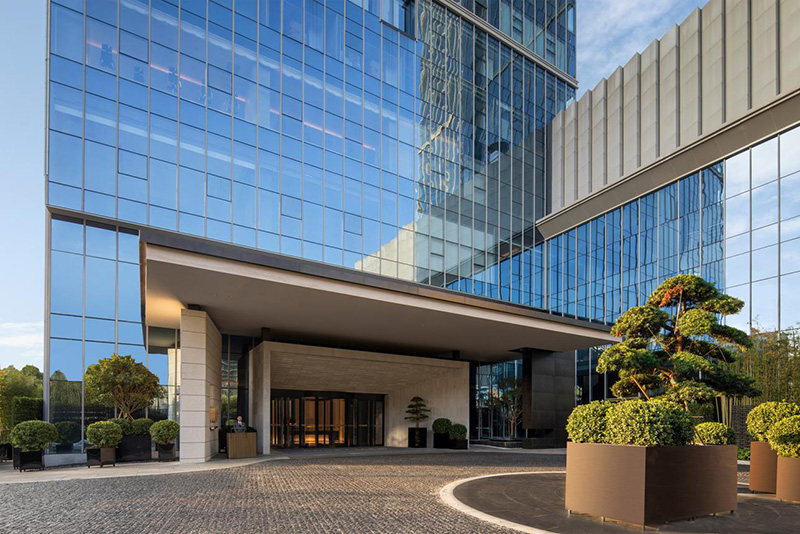
The underlying portfolio of Hu'an Jinjiang Commercial REIT provides an interesting example of hotel asset management.
Its 21 hotels are distributed across 18 Chinese cities, covering first-tier, emerging first-tier, second-tier and third-tier markets.
Among these properties, 15 are located in second-tier or higher-tier cities, representing approximately 72% of the total room capacity.
The portfolio is therefore not concentrated in a single city or individual hotel property.
A multi-city portfolio can help reduce exposure to market changes affecting any one particular location.
In addition, the underlying properties are primarily midscale and upscale hotels operating under the Jinjiang Metropolo brand.
Hotels in these categories generally need to balance brand positioning, guestroom configurations, daily operating efficiency and service standards.
From a hotel management perspective, maintaining consistent operating quality becomes increasingly important when a portfolio expands across multiple cities and properties.
For example:
How can hotels maintain consistent basic service standards across different locations?
How should guestroom facilities and daily supplies be managed across multiple properties?
How should hotel renovation and equipment replacement plans be established?
How can hotels maintain guestroom quality while controlling operating expenses?
These questions are closely connected to the long-term operational performance of hotel assets.
In addition to the launch of the hotel REIT, Colliers' hotel investment report also highlights changes in China's hotel transaction market.
According to the report, 17 major hotel transactions took place in China's first-tier cities during the first three quarters of 2026, with a combined value of RMB 7.905 billion.
Compared with the same period last year, the number of transactions increased by 88.9%, while the total transaction value increased by 29.9%.
These figures indicate stronger activity in the hotel investment market.
They also reflect a shift in how the industry evaluates existing hotel properties.
In the past, some hotel projects placed greater emphasis on developing new properties and expanding the number of locations.
However, as accommodation supply continues to grow, more operators and investors are paying attention to hotels that are already operating.
For established properties, reorganizing guestroom layouts, improving facilities, upgrading public areas and optimizing management processes may sometimes offer more practical opportunities than simply constructing additional buildings.
For example, an established hotel may consider:
Reorganizing selected guestroom layouts.
Replacing aging mattresses and guestroom furniture.
Updating bedding, curtains and other textile products.
Improving bathroom facilities and lighting systems.
Adjusting guestroom soft furnishings to reflect a new brand positioning.
These improvements do not necessarily require extensive structural renovations.
In some cases, a planned program of guestroom facility and product upgrades can already make a meaningful difference to the accommodation environment.
As a result, existing hotel renovation and asset maintenance are becoming increasingly relevant topics in hotel investment and operational management.
The number of guestrooms, the location of a hotel and the total building area are all important considerations when evaluating hotel assets.
However, hotels differ from many other types of commercial real estate.
They require not only building maintenance but also continuous operations to generate value.
Guestrooms are among the most important operating spaces within a hotel.
From the completion of construction to years of daily operation, every guestroom experiences ongoing wear and tear.
Mattresses, bed sheets, duvet covers, pillows, duvets, towels, curtains and furniture all experience different levels of deterioration over time.
If a hotel focuses exclusively on its initial construction and furnishing investment while neglecting subsequent maintenance and product replacement, guestroom quality may gradually decline.
For operators holding and managing hotel assets over the long term, these details are far from insignificant.
They are connected to actual guest experiences, room maintenance schedules and operating costs.
For example, bedding that develops excessive pilling, deformation or visible damage after prolonged use can affect the overall appearance of a guestroom.
It may also increase customer complaints and replacement frequency.
By contrast, appropriate product selection, organized replacement schedules and effective management across different properties can help maintain consistent guestroom quality.
The value of a hotel asset is reflected not only in the property itself, but also in its ability to consistently deliver accommodation products that meet market expectations.
Within hotel procurement systems, textiles are generally among the product categories that require continuous replenishment and replacement.
Bed sheets, duvet covers, pillowcases and towels are used and washed regularly.
Their procurement therefore needs to consider more than the initial purchase price.
For hotel groups operating multiple properties, these management requirements become even more important.
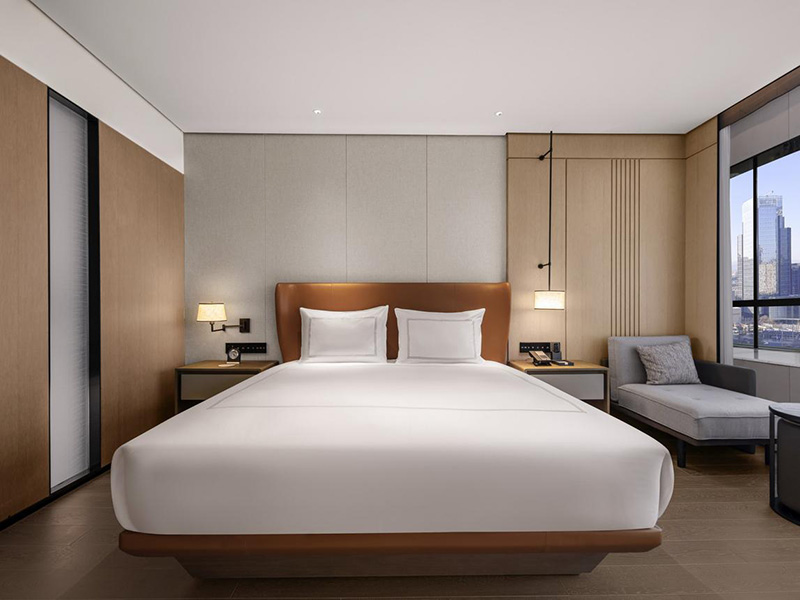
Different hotels may have different bed types and guestroom layouts.
Hotels need clear bedding specifications to ensure that bed sheets, duvet covers and pillowcases match the actual mattresses and duvets in use.
When a hotel group operates in multiple cities, differences in product quality between suppliers or production batches can create additional management challenges.
Consistent fabrics, workmanship and product specifications are therefore important.
Bedding and towels are continuously used products.
Hotels need to organize purchasing according to inventory levels, room capacity, actual product wear and replacement schedules rather than waiting until products become severely damaged.
Midscale hotels, boutique properties and upscale hotels may have different expectations concerning the texture, appearance and practical performance of guestroom textiles.
Product selection should reflect the hotel's brand positioning and actual operating environment.
Together, these considerations form an important part of long-term guestroom quality management.
A new stage of hotel asset management does not mean that every property needs a major renovation.
In practice, many hotels choose to upgrade their facilities in stages according to their operating conditions.
For example, a hotel may first replace bedding and curtains in selected guestrooms before gradually improving lighting, furniture and other facilities.
This approach allows hotels to improve their accommodation environments while managing the scale of renovation investment.
For hospitality suppliers, this also means that market demand does not come exclusively from newly constructed hotels.
Ongoing replenishment, guestroom upgrades, brand repositioning and partial renovations across existing properties can all generate continuing procurement requirements.
For hotel groups with multiple locations, standardized procurement of essential products and phased guestroom upgrades may also create opportunities for longer-term supplier relationships.
Of course, different hotels have different procurement systems and replacement schedules.
Suppliers need to understand each customer's actual requirements rather than treating every hotel as an identical purchasing project.
Changes in the hotel industry are creating new expectations for supply chain companies.
In the past, some suppliers focused primarily on product variety, quotations and short-term orders.
However, hotel groups and long-term operating projects often need to consider additional factors, including product quality, specification consistency, supply reliability and ongoing replenishment capabilities.
For example:
A hotel group operating multiple properties may require standardized bedding specifications and stable product quality.
A hotel undergoing brand repositioning may need to reconsider its bedding and decorative textile combinations.
A property undergoing renovation may need different products delivered in stages according to its room upgrade schedule.
These requirements demand a deeper understanding of individual hotel projects.
Hospitality suppliers need to understand not only what products they manufacture, but also how those products are used within hotels and why different projects require different configurations.
Competition in the future hotel supply chain will involve more than product pricing. Consistent quality, appropriate specifications and long-term service capabilities will also matter.
The launch of China's first hotel-focused public REIT represents an important development in the country's hotel asset management sector.
It provides an additional financing and capital management structure for established hotel properties and offers a new reference point for future industry development.
Meanwhile, changes in hotel transaction activity indicate that investors are paying renewed attention to the operating value of existing hotel assets.
Regardless of the financing model, hotels still depend on actual operations to maintain their asset value.
Buildings require maintenance.
Guestrooms need upgrades.
Equipment requires servicing.
Bedding and other textile products need appropriate replenishment.
Service standards must be maintained.
These seemingly ordinary management activities form an important foundation for long-term hotel operations.
For hotel operators, the relationship between asset value and operating quality deserves increasing attention.
For hospitality suppliers, a deeper understanding of customers' long-term requirements is equally important.
A hotel's long-term competitiveness depends not only on the assets it owns, but also on its ability to manage and operate those assets effectively.
As a hospitality textile supplier, Guangzhou Dige Textile Co., Ltd. continues to follow developments in China's hotel industry, including hotel asset management, guestroom renovation and changes in procurement models.
Our product categories include hotel bed sheets, duvet covers, pillowcases, pillows, duvets, towels and other guestroom textile products.
We believe that as hotels place greater emphasis on long-term operating efficiency, guestroom textiles should also be selected according to their practical applications.
For standardized hotel projects, consistent product specifications and stable quality are particularly important.
For hotels undergoing renovation or brand upgrades, bedding and other soft furnishings should be selected according to the updated guestroom design.
For hotel groups operating multiple properties, specification management and reliable supply capabilities deserve greater attention.
Hotel supplies are not simply decorative accessories.
They are used every day in guestrooms and require ongoing replacement as part of normal hotel operations.
Therefore, appropriate product selection, consistent quality and specifications suited to actual usage requirements all contribute to effective long-term hotel management.
Guangzhou Dige Textile will continue to focus on the quality, specifications and practical applications of hotel bedding and guestroom textiles, providing suitable product options for different types of hotel projects.
Hotel assets may be held for many years, but guestroom quality requires attention every day. Reliable hospitality textiles should be able to withstand daily use and meet the demands of long-term hotel operations.

Contact: Tracy Kuang
Phone: +86-18565305509
Tel: 020-26261315
Email: 1702435072@qq.com
Add: No.38 Xihua Street, Maoshan, Jianggao Town, Baiyun District, Guangzhou, China