Welcome: Guangzhou DIGE Textile Co., Ltd
Language:
 ∷

∷
 ∷
In October 2026, one of China's most recognizable luxury hotel landmarks entered a new chapter.
The former Sheraton Huzhou Taihu Lake Hot Spring Resort & Spa, widely known as the "Moon Hotel" because of its distinctive ring-shaped architecture, officially ended its brand partnership with Marriott International.
According to public reports citing the hotel's announcement, the partnership concluded upon the expiration of the existing agreement.
Effective October 1, 2026, the property adopted the name Huzhou Taihu Moon Hot Spring Resort.
Importantly, this change did not mean the hotel had closed.
The property continued operating, with its accommodation services and booking arrangements remaining available.
For China's luxury hospitality industry, however, this development raises questions that extend far beyond the removal of an international hotel brand name.
When a well-known hotel no longer operates under an international brand, what determines whether guests will continue to trust its quality?
The answer may lie not only in management and marketing, but also in the guestroom experience itself.
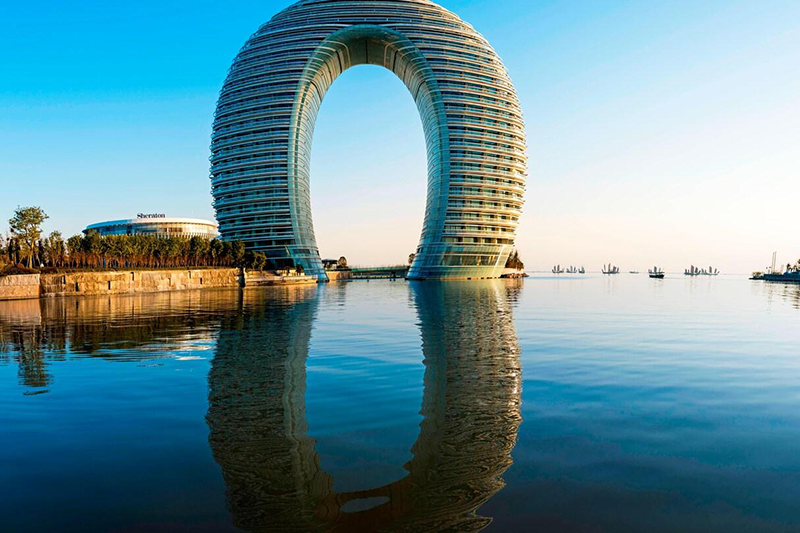
Located on the southern shore of Taihu Lake in Huzhou, Zhejiang Province, the Moon Hotel is famous for its remarkable ring-shaped building.
Its curved architectural structure rises above the lakeside, creating one of the most recognizable hotel silhouettes in the region.
At night, the illuminated building and its reflection on the lake form a distinctive visual landmark.
Over the years, the property has become more than a luxury resort.
It has also become part of Huzhou's tourism identity.
During its years under the Sheraton brand, the hotel welcomed business travelers, leisure tourists, families and guests attending events or celebrations.
Now that the international brand partnership has ended, the property is entering a different phase of its operating history.
However, an important distinction remains.
The architecture has not disappeared. The lakeside location remains unchanged. The building continues to exist as a landmark.
What has changed is the hotel's brand identity and the framework through which it presents itself to guests.
The challenge ahead is therefore not simply about choosing a new name.
It is about maintaining a guest experience that remains worthy of the property's reputation.
Hotel brand changes are not unusual in the global hospitality industry.
Properties may change brands when management agreements expire, ownership strategies evolve, market positioning changes or new operating models are introduced.
Different hotels may have different reasons for making such decisions.
Therefore, the removal of an international brand should not automatically be interpreted as a hotel closure or operational failure.
For hotel owners, brand conversion can create an opportunity to reconsider the property's long-term direction.
For guests, however, the questions are often much more practical.
Will the rooms remain comfortable?
Will the service standards change?
Will facilities continue to be properly maintained?
Will the overall experience still match the hotel's positioning?
These questions become especially important when a property has operated for many years under a familiar international name.
The international brand may have helped establish initial expectations.
But after a transition, the hotel must increasingly demonstrate its quality through its own performance.
International hotel brands provide guests with a recognizable reference point.
Travelers may associate a familiar brand with established service procedures, guestroom standards and a predictable accommodation experience.
When a hotel adopts an independent identity, those expectations need to be supported by the property itself.
This brings greater attention to the details guests can experience directly.
For example:
Is the guestroom clean and well maintained?
Does the bed feel comfortable?
Does the pillow offer appropriate support?
Is the duvet suitable for the room temperature?
Do towels and bath linens feel pleasant to use?
Are the facilities functioning properly?
These may appear to be basic questions.
However, they form the foundation of a hotel's daily service.
An international brand can help create expectations, but consistently comfortable guestrooms help turn those expectations into lasting guest confidence.
For established luxury hotels undergoing brand changes, maintaining these fundamentals can be particularly important.
When a hotel changes its brand, does the entire property need to be renovated?
Not necessarily.
The appropriate approach depends on the condition of the existing building, the target market and the positioning of the new brand.
For a hotel with well-maintained facilities, a phased improvement program may be more practical than rebuilding or replacing everything.
One starting point could be the guestroom textile system.
Hotels can review whether their existing bed sheets, duvet covers, pillows, duvets, towels and curtains still meet the expectations of their target guests.
Decorative textile elements can also be reconsidered.
Bed runners, cushions, curtain colors and other soft furnishings may be adjusted to reflect a refreshed brand identity.
In some situations, relatively small changes can create a more consistent visual impression without requiring extensive structural work.
For a large established property, successful rebranding is not simply about changing the sign outside.
It is about ensuring that the existing facilities, guestroom products and service standards support the hotel's new identity.
When people discuss hotel rebranding, they often focus on exterior signage, lobby design, marketing materials and management changes.
Yet another important element exists inside every guestroom.
Hotel bedding and hospitality textiles.
Bed sheets, duvet covers, pillowcases, pillows, duvets and towels are products that guests use directly throughout their stay.
Their quality influences how comfortable and well maintained a room feels.
A luxury hotel can retain its famous architecture and introduce a refreshed visual identity.
However, if the bedding does not match the intended guest experience, the overall result may feel incomplete.
For this reason, established hotels reviewing their brand positioning may also benefit from reassessing their textile configurations.
Important considerations include whether existing bedding matches the room's design, whether pillows and duvets suit the target guest profile, and whether different room categories maintain consistent product standards.
These details are rarely as visible as a major architectural renovation.
Nevertheless, they can influence guest satisfaction every night.
International hotel groups typically establish detailed standards for guestroom presentation, purchasing and service delivery.
These systems help hotels maintain consistency across multiple properties.
When a property transitions to a new independent identity, its owners and operators may have an opportunity to review the product standards that best suit their specific market.
For example, a lakeside resort may prioritize different guestroom characteristics from an urban business hotel.
Leisure guests may spend more time inside their rooms and place greater emphasis on relaxation and comfort.
Business travelers may value practicality, quietness and consistent room presentation.
Local climate and seasonal conditions can also influence bedding selection.
However, becoming independent should not mean abandoning standardization.
In fact, a hotel operating under its own identity may need an even clearer set of internal product requirements.
These can include:
Bed sheet and duvet cover dimensions
Fabric specifications and finishing requirements
Pillow filling and support characteristics
Duvet comfort and seasonal suitability
Towel specifications
Guestroom presentation and replenishment standards
A well-defined product system helps the property maintain consistency as operating needs evolve.
Independence gives a hotel greater flexibility, but maintaining quality still requires clear and reliable standards.
The Huzhou Moon Hotel has one advantage that few properties can easily reproduce.
Its architecture is instantly recognizable.
Travelers may know the building from photographs long before visiting Huzhou.
That recognition gives the property a distinctive identity in the tourism market.
But attracting a first-time visitor and encouraging a return visit are two different challenges.
A traveler may initially book the hotel because of its unusual design.
The decision to return, however, is more likely to depend on the actual accommodation experience.
Was the room comfortable?
Did the service meet expectations?
Were the facilities well maintained?
Did the stay feel consistent with the hotel's positioning?
For established luxury properties, these questions become increasingly important over time.
The building creates the first impression.
But guestrooms, bedding, dining and personal service help determine the final impression.
An iconic building may become a destination, but lasting hospitality quality is what helps turn visitors into returning guests.
The hospitality supply industry has traditionally focused heavily on new hotel openings.
New properties often require large initial purchases of bedding, towels and other guestroom supplies.
However, brand conversion represents another potential source of demand.
Unlike a newly built hotel, an existing property normally has established room layouts, furniture and operating procedures.
This creates a different type of procurement challenge.
For example, replacement bedding must fit existing beds and room dimensions.
New decorative textiles may need to coordinate with established interior finishes.
Pillow and duvet configurations may be updated without changing the entire guestroom layout.
Product specifications may also need to support the hotel's new brand identity while remaining compatible with existing operations.
For suppliers, this requires a more project-specific approach.
The objective is not simply to sell a new batch of textile products.
It is to understand which products should be retained, which may need improvement and how different items can work together.
This reflects a broader opportunity in the hospitality textile market.
Hotels undergoing rebranding, repositioning or phased upgrades may require specialized textile solutions even when they are not opening new properties.
As a hospitality textile supplier, Guangzhou Dige Textile Co., Ltd. continues to follow developments in China's hotel industry and international accommodation markets.
Our product categories include hotel bed sheets, duvet covers, pillowcases, pillows, duvets, towels and other guestroom textile products.
We recognize that hotels at different stages of operation have different requirements.
Newly opened hotels need complete bedding configurations aligned with their initial room designs.
Established hotels may need to review existing products and introduce selected upgrades.
Properties undergoing brand conversion may have additional requirements related to maintaining continuity while developing a refreshed identity.
We believe that a hotel's long-term reputation depends on more than the name displayed above its entrance.
Comfortable bedding, consistent product quality, coordinated guestroom design and attentive service all contribute to the experience guests remember.
The Huzhou Moon Hotel's transition away from the Sheraton brand offers a recent example of how an established luxury property can enter a new operating phase.
For the hospitality textile industry, the broader lesson extends beyond brand management.
Hotels may change their names, adjust their positioning or explore new operating models.
What should remain important is the quality guests experience once they enter their rooms.
As more established hotels evaluate their future direction, hospitality suppliers will need to understand the different requirements created by renovation, brand conversion and long-term property operation.
A hotel brand can establish an identity, but a consistently comfortable guest experience is what helps build a lasting reputation.
Contact: Tracy Kuang
Phone: +86-18565305509
Tel: 020-26261315
Email: 1702435072@qq.com
Add: No.38 Xihua Street, Maoshan, Jianggao Town, Baiyun District, Guangzhou, China